Death of the Darwinian Dinosaur
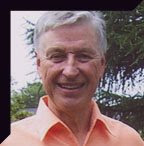
James W. Gustafson, PhD
It finally became clear to me that Darwin is essentially dead. Rather, Darwinianism is dead—or at most on life support. It has become an intellectual fossil to be displayed among paradigms and theories that once were powerful but have lost their explanatory power.
Let me explain.
For years I have presented to my philosophy students the options available to explain the universe and our place in it. One of the big questions debated has been between chance and design. Is the universe a teleological system or ateleological. That’s is, has an intelligence created the universe for some purpose? Or is it just something that happened on its own and is unguided, thus having no purpose as such? I have always presented the supporting arguments for both sides as convincingly as possible for me. And I have often stepped into the world of naturalism and sat in Darwin’s chair in order to see reality from his perspective. Over time the view from that chair has become less and less tenable.
I was watching a football game at the time of this moment of clarity. It occurred to me that the struggle between the two opposing sides is a bit like a football game, with each team trying to finish off the other. Who will win? Will it be the naturalist team, the Dinosaurs, with Darwin at quarterback calling plays with agnostic linemen blocking for atheist running backs? Or will it be the Grand Design team?
On TV today the New England Patriots have a 20-10 lead and are running down the clock with under two minutes to go. There is a mathematical possibility that the Carolina Panthers could recover a fumble, score a touchdown, do an onside kick and make a 60-yard field goal to send the game into overtime. But realistically, the game is over. The Patriots have the ball. The outcome is decided.
The same for this philosophical debate. The two minute warning has been given now. The design team has just taken the lead and has possession of the ball. I think the game is over. Design has won. Evolutionism is still on the field but is essentially defeated.
Darwin’s bulldogs are getting more desperate and shrill. The Design team is now capturing the majority of fans.
How has this happened?
For over a century the Darwin Dinosaurs built a winning franchise. The fossil records, with a little bit of tweaking, seemed to show the progress of complexity over millions of years. One could then assume that the picks of geologists would soon unearth the missing links. Everything would be explained without appealing to a design factor.
Then came microbiology, examining human cells. Darwin knew nothing of the cell’s composition—it was blob of gelatin for all he knew over 100 years ago. Now we know a lot. What is contained in a single cell is an incredible complexity of wonders that stretches Darwinian assumptions to the breaking point. It now takes a huge leap of faith to believe that chance could create this complexity in a few hundred million years. To see the hand of intelligence in it is now a small and logical step.
What is lighting the fuses of militant atheists like Richard Dawkins?
Desperation perhaps? It is a shame to see scientists of his caliber, who are theoretically committed to follow evidence wherever it leads, resort to rhetorical tricks that shows desperation. They seem to be hoping for Hail Mary long-ball. Er— make that a Hail Darwin.
Meanwhile Francis Collins, Michael Behe, William Dembski, Phillip Johnson, Hugh Ross and many others argue for an overarching intelligence as the only adequate explanation for the complexity of the universe as we know it. Even one of atheism’s most prestigious voices has jumped ship, now concluding there is a deistic intelligence that authored the complex universe we live in. He is Antony Flew.
An intelligence is at work. Chance operating over time cannot explain what is now before our wondering eyes. Is that intelligence the God of Genesis? Or the god of Aristotle who operates internally within the universe? The most sophisticated candidate is the God whom Jesus Christ revealed in his matchless teachings.
Admittedly, looking at the issue from the perspective of a cosmologist we cannot prove that such an intelligent creator reveals himself in sacred documents or has visited planet Earth in person. But it makes such claims conceivable.
Postmodern perspectives.
One of the problems with Darwinism—and Intelligent Design—is that they operate within the paradigm of Cartesian foundationalism—the attempt to prove the absolute truth of a set of abstract ideas that give a cogent and coherent account of reality. This paradigm is losing credit among philosophers.
So the crux of the concern shifts to the value and meaning human life rather than speculation about the nature of existence as a whole. While a worldview must accommodate a reasonable explanation of the facts as we currently know them, it must also be practical—a worldview that enhances life—in which life can flourish.
Here Darwinism is at a second disadvantage. If humans are no more than intelligent animals what can one aspire to? While it may be theoretically possible for us to create a world of peace and prosperity, the odds are against it. Human beings tend to be self-centered. If one believes that death is the end of one’s existence forever, why fight against the dark side of human nature? Why be concerned for the health of the planet since biology claims that every species goes extinct sooner or later. Even if one enjoys a life of ease there is a spiritual hunger in us that yearns for transcendence. I suppose education could possibly erase this aspect of our nature. That would prove difficult. Furthermore, would it be desirable even it could be done?
What is the likelihood that social engineering of the human person would result in harmony and a flourishing culture? Wherever social engineering has been tried on a large scale it has not made things better.
What makes us better is a commitment to a higher cause, especially a transcendent cause. It takes a renovation of the heart that inspires us to serve a transcendent meta-narrative. Darwinism is unable to support such a commitment. A teleological view of the universe can sustain it. There is a Grand Design that beckons us. If the evidence points to an Intelligence that is pulling the universe toward a transcendent end, our task is to seek a relationship with this Intelligence that will satisfy the innate longings of the human heart. That intelligence has spoken through the genetic code in a convincing way. Has that Intelligence spoken to us more directly in human language? Maybe if we seek, we will find the answer.
Friday, November 5, 2010

Saturday, October 9, 2010
What counts for knowledge?
This is the big question in epistemology, the theory of how we acquire beliefs that can be relied upon.
Let’s start at the present situation—post-modernism. In a nutshell, this philosophy says that there is no way for humans to arrive at truth or knowledge—at least not in a way that goes beyond our subjective opinions. In this philosophy the Sophists Plato did battle against have come back and claimed victory. All knowledge is so subjective that our minds are filled with ideas that are simply that—our own ideas.
Yet post-modernism is complex and even confusing. It may mean that knowledge is impossible—that all we are examining in our thought processes is the interior of our minds. Thinking is a hall of mirrors that shows nothing beyond itself.
But it may be fair to say that post-modernism simply points out that our thoughts are always our thoughts and thus point to yet more thoughts. These ideas, however, could be, as Berkeley proposed centuries ago, the substance of reality itself.
Perhaps the entirety of the universe is a system of ideas after all. The phenomena that we are restricted to, as Kant put it in his epistemology, may well be the stuff of reality, not merely the stuff our inner mental furniture.
Epistemology has long argued as to whether our inner ideas and the objects outside our minds are fundamentally distinct or whether they are similar. If ideas and the objects of reality are of different orders of reality (dualism) then we can never be sure our ideas gives us insight into reality or not. An analogy fits here. If I want to know whether my photo of a person provides an accurate depiction of that person it will not do to compare my photo with another photo or series of photos. Since our minds contain only our impressions of reality, we can never be sure whether we know what’s out there or not. This kind of musing nearly drove David Hume to drink. It certainly motivated him to while away many hours at the backgammon table, whether fortified with a tankard or not I cannot say.
On the other hand, if we build on the perspective of George Berkeley (after whom Berkeley, CA is named) we might say that reality itself is a system of ideas rather than a conglomeration of brute matter. Berkeley’s view may be hinted at in the statement of St. Paul: “in Him we live and move and have our being.” Who is to say that God created a material world out of dead, inert, unthinking atoms, as Democritus said, rather than out of vibrant interacting ideas? We need not appeal merely to Leibniz’ monad (a kind of thinking atom) but to contemporary thinkers who say that the universe resembles a giant thought more than a swirling mass of dead particles.
One thing is clear to me. The theory of knowledge we espouse will decide what mental children our minds conceive. The drift of philosophy over the last century or so toward sensation and a material view of substances has taken us within view of the end of road for philosophy. This is what post-modernists often conclude, as the following shows.
Post-modernism is arguably the most depressing philosophy ever to spring from the western mind. It is difficult to talk about post-modernism because nobody really understands it. It’s allusive (sic) to the point of being impossible to articulate. But what this philosophy basically says is that we’ve reached an endpoint in human history. That the modernist tradition of progress and ceaseless extension of the frontiers of innovation are now dead. Originality is dead. The avant-garde artistic tradition is dead. All religions and utopian visions are dead and resistance to the status quo is impossible because revolution too is now dead. Like it or not, we humans are stuck in a permanent crisis of meaning, a dark room from which we can never escape. (Kalle Lasn & Bruce Grierson, A Malignant Sadness, ADBUSTERS #30, June/July 2000 as quoted in Wikipedia)
I venture to say that post-modernism does not necessarily point to such a dismal conclusion. It rather warns us that our thinking has veered off the track. If there is an Intelligence behind the reality we see all around us, especially with our scientific instruments, then we may have confidence that our way of thinking is suited to our cosmic environment. That environment, in turn, is pregnant with hints of intelligence as well as of power and grandeur. We think logically and systematically because we are children of a Transcendent Reality expressing itself with wisdom and especially with beauty. Here the epistemic and the aesthetic come together.
This is where my spiritual experience of God intersects with my philosophic understanding of the cosmic environment in which I am embedded.
And in the end, my astonishment at the incredible complexity and functionality of everything gives rise to experiences of elevation before the glory and beauty of The Real in all its stunning variety.
For me this is a philosophical expression of what the Apostle implied in the following references. “In Him we live and move and have our being.” Acts 17:38 “By Him all things hang together.” Colossians 1:17 “His eternal power and glory are evident in what has been made.” Romans 1:20
For me, this is the heart of worshiping the Infinite-personal Supreme Spiritual Being who has planted in each of us the spark of his own image.
Let’s start at the present situation—post-modernism. In a nutshell, this philosophy says that there is no way for humans to arrive at truth or knowledge—at least not in a way that goes beyond our subjective opinions. In this philosophy the Sophists Plato did battle against have come back and claimed victory. All knowledge is so subjective that our minds are filled with ideas that are simply that—our own ideas.
Yet post-modernism is complex and even confusing. It may mean that knowledge is impossible—that all we are examining in our thought processes is the interior of our minds. Thinking is a hall of mirrors that shows nothing beyond itself.
But it may be fair to say that post-modernism simply points out that our thoughts are always our thoughts and thus point to yet more thoughts. These ideas, however, could be, as Berkeley proposed centuries ago, the substance of reality itself.
Perhaps the entirety of the universe is a system of ideas after all. The phenomena that we are restricted to, as Kant put it in his epistemology, may well be the stuff of reality, not merely the stuff our inner mental furniture.
Epistemology has long argued as to whether our inner ideas and the objects outside our minds are fundamentally distinct or whether they are similar. If ideas and the objects of reality are of different orders of reality (dualism) then we can never be sure our ideas gives us insight into reality or not. An analogy fits here. If I want to know whether my photo of a person provides an accurate depiction of that person it will not do to compare my photo with another photo or series of photos. Since our minds contain only our impressions of reality, we can never be sure whether we know what’s out there or not. This kind of musing nearly drove David Hume to drink. It certainly motivated him to while away many hours at the backgammon table, whether fortified with a tankard or not I cannot say.
On the other hand, if we build on the perspective of George Berkeley (after whom Berkeley, CA is named) we might say that reality itself is a system of ideas rather than a conglomeration of brute matter. Berkeley’s view may be hinted at in the statement of St. Paul: “in Him we live and move and have our being.” Who is to say that God created a material world out of dead, inert, unthinking atoms, as Democritus said, rather than out of vibrant interacting ideas? We need not appeal merely to Leibniz’ monad (a kind of thinking atom) but to contemporary thinkers who say that the universe resembles a giant thought more than a swirling mass of dead particles.
One thing is clear to me. The theory of knowledge we espouse will decide what mental children our minds conceive. The drift of philosophy over the last century or so toward sensation and a material view of substances has taken us within view of the end of road for philosophy. This is what post-modernists often conclude, as the following shows.
Post-modernism is arguably the most depressing philosophy ever to spring from the western mind. It is difficult to talk about post-modernism because nobody really understands it. It’s allusive (sic) to the point of being impossible to articulate. But what this philosophy basically says is that we’ve reached an endpoint in human history. That the modernist tradition of progress and ceaseless extension of the frontiers of innovation are now dead. Originality is dead. The avant-garde artistic tradition is dead. All religions and utopian visions are dead and resistance to the status quo is impossible because revolution too is now dead. Like it or not, we humans are stuck in a permanent crisis of meaning, a dark room from which we can never escape. (Kalle Lasn & Bruce Grierson, A Malignant Sadness, ADBUSTERS #30, June/July 2000 as quoted in Wikipedia)
I venture to say that post-modernism does not necessarily point to such a dismal conclusion. It rather warns us that our thinking has veered off the track. If there is an Intelligence behind the reality we see all around us, especially with our scientific instruments, then we may have confidence that our way of thinking is suited to our cosmic environment. That environment, in turn, is pregnant with hints of intelligence as well as of power and grandeur. We think logically and systematically because we are children of a Transcendent Reality expressing itself with wisdom and especially with beauty. Here the epistemic and the aesthetic come together.
This is where my spiritual experience of God intersects with my philosophic understanding of the cosmic environment in which I am embedded.
And in the end, my astonishment at the incredible complexity and functionality of everything gives rise to experiences of elevation before the glory and beauty of The Real in all its stunning variety.
For me this is a philosophical expression of what the Apostle implied in the following references. “In Him we live and move and have our being.” Acts 17:38 “By Him all things hang together.” Colossians 1:17 “His eternal power and glory are evident in what has been made.” Romans 1:20
For me, this is the heart of worshiping the Infinite-personal Supreme Spiritual Being who has planted in each of us the spark of his own image.
Saturday, July 24, 2010
East and West
How can we explain the significant difference between what are often called Eastern religions and Western monotheistic religions?
One answer may be that eastern religions are primarily ethical while monotheisms are primarily metaphysical (explaining the nature of the what is real).
This bears explanation.
While it is obvious that all religions (and even secular humanism) combine both ethics and metaphysics, the monotheistic religions draw their ethical requirements from the metaphysical structure of reality. The eastern religions paint a metaphysical background to support their ethical claims.
The sages of the east, from the origins of Hinduism to Buddhism to Confucius and others, focused on how one should behave in society as the first concern. Duties to one’s family, friends and society at large are paramount. Be a good citizen, a good friend, a good father, mother or son or daughter.
Eastern mythology paints a backdrop of what the universe is to support these ethical claims. From the Vedas to Taoism’s Tao Te Ching and even Confucius’ references to Heaven’s Mandate there is little concern as to whether the sagas and descriptions of the Ultimate Reality are factual. It is one’s duty that is foremost. The nature of the universe is secondary.
In the monotheistic religions and in the secular worldview the prime concern is to discern the nature of the universe at large. As Thomas Cahill has argued in "The Gifts of the Jews," Abraham was the first to successfully promote a linear view of history rather than a cyclical view.
For eastern religions the universe proceeds in endless cycles. The basic metaphysical conditions that support the human quest for meaning are almost irrelevant. Humans are re-born in countless cycles until they achieve ethical perfection, whereupon they cease to exist as individuals, merging with The One in an existence that is neither spatial nor temporal.
In the western view history is linear. It has a beginning, a middle and an end.
The universe was created at a precise time in the past—perhaps some 13 billion years go. Our study of the dynamics of the universe enable us to predict an end of history as we know it when the sun explodes and in the end the universe winds down some billions of years in the future. Meanwhile, we live somewhere in the middle.
Because of this view of reality, western thought derives its ethics in keeping with this worldview. Life is not a cycle of suffering that one hopes to be relieved of. Life is an opportunity to engage in the drama of cosmic history. One strives to live an ethical life in order to enjoy the beauty and wisdom of God long after life on this planet is over. Rather than achieving a release from individually conscious life, one seeks an enhancement of life, in which the individual reaches a higher awareness of the universe and the One who has created it. A single lifetime on this planet is all we need to secure our place in the unfolding story of creation.
Secular humanism arose in this western context. Humans, say humanists, have one lifetime in which to arrive at ethical fulfillment. Secularism of course denies that life goes on after death. But the arrow of time proceeds in one direction, whether one believes in immortality of the individual or not. There is no evidence that humans cycle through countless lives on this planet. We get only one chance. For the secularist we must get whatever we can before we die and suffer the extinction of the self. For the theist we must live in such a way as to prepare ourselves for life on a higher plane - a new heaven and a new earth. But that future world will have space and time and personal experiences.
This explains why monotheists believe in the resurrection of each person to face a verdict as to their place in the higher level of life that is coming. One’s ethical achievements show what that destiny is to be. But the significant difference is that an individual persists in the future timeline fully cognizant of his or her prior experience. By contrast, in eastern cyclical worldviews the individual’s goal is to cease existing as an individual altogether. To be sure, there are exceptions to these details among the permutations of eastern religions. But this is true as a generalization.
The ethical systems of monotheism arise from the wider concept of its linear metaphysical worldview. The metaphysical views of eastern thought are created to support its ethical requirements. In the West reality determines ethics. In the East ethics determines reality.
To grasp this provides insight into these diverse worldviews. If we wish to analyze the comparative credibility of each system one must scrutinize the underlying (and to most people invisible) assumptions of epistemology. How does one sort out what counts for knowledge? That is a long story, to be continued....
One answer may be that eastern religions are primarily ethical while monotheisms are primarily metaphysical (explaining the nature of the what is real).
This bears explanation.
While it is obvious that all religions (and even secular humanism) combine both ethics and metaphysics, the monotheistic religions draw their ethical requirements from the metaphysical structure of reality. The eastern religions paint a metaphysical background to support their ethical claims.
The sages of the east, from the origins of Hinduism to Buddhism to Confucius and others, focused on how one should behave in society as the first concern. Duties to one’s family, friends and society at large are paramount. Be a good citizen, a good friend, a good father, mother or son or daughter.
Eastern mythology paints a backdrop of what the universe is to support these ethical claims. From the Vedas to Taoism’s Tao Te Ching and even Confucius’ references to Heaven’s Mandate there is little concern as to whether the sagas and descriptions of the Ultimate Reality are factual. It is one’s duty that is foremost. The nature of the universe is secondary.
In the monotheistic religions and in the secular worldview the prime concern is to discern the nature of the universe at large. As Thomas Cahill has argued in "The Gifts of the Jews," Abraham was the first to successfully promote a linear view of history rather than a cyclical view.
For eastern religions the universe proceeds in endless cycles. The basic metaphysical conditions that support the human quest for meaning are almost irrelevant. Humans are re-born in countless cycles until they achieve ethical perfection, whereupon they cease to exist as individuals, merging with The One in an existence that is neither spatial nor temporal.
In the western view history is linear. It has a beginning, a middle and an end.
The universe was created at a precise time in the past—perhaps some 13 billion years go. Our study of the dynamics of the universe enable us to predict an end of history as we know it when the sun explodes and in the end the universe winds down some billions of years in the future. Meanwhile, we live somewhere in the middle.
Because of this view of reality, western thought derives its ethics in keeping with this worldview. Life is not a cycle of suffering that one hopes to be relieved of. Life is an opportunity to engage in the drama of cosmic history. One strives to live an ethical life in order to enjoy the beauty and wisdom of God long after life on this planet is over. Rather than achieving a release from individually conscious life, one seeks an enhancement of life, in which the individual reaches a higher awareness of the universe and the One who has created it. A single lifetime on this planet is all we need to secure our place in the unfolding story of creation.
Secular humanism arose in this western context. Humans, say humanists, have one lifetime in which to arrive at ethical fulfillment. Secularism of course denies that life goes on after death. But the arrow of time proceeds in one direction, whether one believes in immortality of the individual or not. There is no evidence that humans cycle through countless lives on this planet. We get only one chance. For the secularist we must get whatever we can before we die and suffer the extinction of the self. For the theist we must live in such a way as to prepare ourselves for life on a higher plane - a new heaven and a new earth. But that future world will have space and time and personal experiences.
This explains why monotheists believe in the resurrection of each person to face a verdict as to their place in the higher level of life that is coming. One’s ethical achievements show what that destiny is to be. But the significant difference is that an individual persists in the future timeline fully cognizant of his or her prior experience. By contrast, in eastern cyclical worldviews the individual’s goal is to cease existing as an individual altogether. To be sure, there are exceptions to these details among the permutations of eastern religions. But this is true as a generalization.
The ethical systems of monotheism arise from the wider concept of its linear metaphysical worldview. The metaphysical views of eastern thought are created to support its ethical requirements. In the West reality determines ethics. In the East ethics determines reality.
To grasp this provides insight into these diverse worldviews. If we wish to analyze the comparative credibility of each system one must scrutinize the underlying (and to most people invisible) assumptions of epistemology. How does one sort out what counts for knowledge? That is a long story, to be continued....
Sunday, April 11, 2010
The joy of giving
I learn so much every time I go to church. And I go often. I follow Jesus and he went every week. I learn something of value each time.
For example, one of the highest aspects of following Jesus is a life of joy.
Now this is not the same as happiness. Happiness depends on things going good for you. Joy can be there even when you are in pain, being rejected, and amidst other kinds of suffering. I talk with people in church every week who have troubles of various sorts but who have an underlying joy.
And remember that religion is mostly about how to escape suffering of various kinds. In fact, one could say that almost all human efforts are directed at keeping suffering at bay. Even boredom is a type of suffering. People chasing good times, playboy escapades, getting money or power or fame comes down to avoiding suffering in its various forms.
Secular people, too, try to have a nice life as long as they can until the grave opens up to swallow them. Religious people try to keep bad karma at bay or to escape the hurly-burly of life through meditation and other techniques. Or they hope to be good enough to earn a good place in the afterlife or maybe buy off the gods.
But Jesus said to the religious people of his time that they had to make God their sole priority, since God does not settle for a mere part of our hearts. Either we love him totally and forsake all else or we are really worshiping gods of our own imagining. This is tough stuff. Most of his followers gave up on him. Why? Because he asks for much more than religious people are willing to give. For example, he tells the guy with money and a good reputation to give it all to the poor and follow him. Of course, the guy doesn’t do it. He just cannot be that committed.
We really cannot grasp how radical Jesus teaching is unless we read the Gospels and the other writings of those who heard him say and do what he said and did. But, amazingly, most who call themselves Christians have not studied the words of this man—the most important single human who ever lived. In fact, most have not even read his teaching even once with an adult mind.
Here’s an example of what taking Jesus seriously means.
Today at our church we honored another group of lay people as they launch an effort to help the orphans in Africa. Now these are all lay people who conceived, organized, and are now executing this. They call their group Kulea—an African term for “take care of the children.” They formed a non-profit in New Hampshire last December so they can raise money to build orphanages in Tanzania and Kenya.
The HIV-AIDs epidemic has left millions of orphans there. The governments are corrupt and do nothing for them. (Read the latest National Geographic for the plight of women who spend almost all their time fetching water in the drought areas of Kenya and Ethiopia with no help from their government.)
Another example. Last week eight men—mostly electricians— from Common Ground went off to Honduras to build an airstrip for a tribe of 25,000 who have no medical care whatsoever. The goal is to fly in doctors to an abandoned Sandinista era clinic, since there are no roads to these villages. (Common Ground is a fellowship of Christian men from the Merrimack Valley who get together to make a difference where they can.)
Consider these facts.
* One-third of our fellow humans (two billion people) spend all their time trying to get food and water for the day. Among these people 33,000 children die each day from easily preventable diseases due to bad water and sanitation.
* Another two billion are surviving, but on the edge, living on $2 a day on average. A study by researchers showed that women in these areas wanted only two things: their babies to survive and for their kids to have an education—two things we don’t even think about for our kids. They know that if their children can read and write they have a chance to use their power to change things. That’s why the Taliban, by the way, destroyed hundreds of schools for girls. It is hard to dominate people who can get information. (Even China is having a tough time controlling their people now that the Internet is there.)
* The 48 countries in sub-Saharan Africa have a combined GDP comparable to the city of Chicago. Or put it this way—the combined economies of these 48 nations are less than the assets of the three richest people in the world. (Think Bill Gates, Warren Buffet and some guy from India.)
Now the answer to this, in my view, is not merely political—or even mostly political, even though a key element is corrupt politicians in these nations. Nor is it the United Nations. The main remedy is folks like you and me—as the people starting Kulea—doing what we can directly.
I am a philosophy professor on a pension—not a lot of assets. But I, like you, am among the 1% of the richest people on the planet. One of my greatest joys is going overseas as a volunteer to help educate people in Africa and India and to raise money for other projects like Kulea.
As a follower of Jesus my heart is filled with joy at helping out. Every week I hear about something that makes me reach a little deeper into my wallet. And it is a blast!
But none of this is going to earn me points with God. Reading the writings of St. Paul and St. John I realize that God’s love for me is a total gift given free. My efforts to make a difference are the result of God’s grace, not the cause. Just like my blessing my grandkids is not given to them because they try to please me so they can earn my love. My blessing is given just because I love them. And that love causes their love to flow back to me. Love like that is unconditional. And it creates love in return because it changes the relationship to one of joy, not one of “I better give a nod to Grandpa or he will cut me out of his will.” It's true. It is more fun to give than to receive.
This is why the ideas of Jesus were—and are—so revolutionary. God gave everything to us first. We simply accept it. That changes us so profoundly it is like being born all over again as a different person—a person like Jesus.
For example, one of the highest aspects of following Jesus is a life of joy.
Now this is not the same as happiness. Happiness depends on things going good for you. Joy can be there even when you are in pain, being rejected, and amidst other kinds of suffering. I talk with people in church every week who have troubles of various sorts but who have an underlying joy.
And remember that religion is mostly about how to escape suffering of various kinds. In fact, one could say that almost all human efforts are directed at keeping suffering at bay. Even boredom is a type of suffering. People chasing good times, playboy escapades, getting money or power or fame comes down to avoiding suffering in its various forms.
Secular people, too, try to have a nice life as long as they can until the grave opens up to swallow them. Religious people try to keep bad karma at bay or to escape the hurly-burly of life through meditation and other techniques. Or they hope to be good enough to earn a good place in the afterlife or maybe buy off the gods.
But Jesus said to the religious people of his time that they had to make God their sole priority, since God does not settle for a mere part of our hearts. Either we love him totally and forsake all else or we are really worshiping gods of our own imagining. This is tough stuff. Most of his followers gave up on him. Why? Because he asks for much more than religious people are willing to give. For example, he tells the guy with money and a good reputation to give it all to the poor and follow him. Of course, the guy doesn’t do it. He just cannot be that committed.
We really cannot grasp how radical Jesus teaching is unless we read the Gospels and the other writings of those who heard him say and do what he said and did. But, amazingly, most who call themselves Christians have not studied the words of this man—the most important single human who ever lived. In fact, most have not even read his teaching even once with an adult mind.
Here’s an example of what taking Jesus seriously means.
Today at our church we honored another group of lay people as they launch an effort to help the orphans in Africa. Now these are all lay people who conceived, organized, and are now executing this. They call their group Kulea—an African term for “take care of the children.” They formed a non-profit in New Hampshire last December so they can raise money to build orphanages in Tanzania and Kenya.
The HIV-AIDs epidemic has left millions of orphans there. The governments are corrupt and do nothing for them. (Read the latest National Geographic for the plight of women who spend almost all their time fetching water in the drought areas of Kenya and Ethiopia with no help from their government.)
Another example. Last week eight men—mostly electricians— from Common Ground went off to Honduras to build an airstrip for a tribe of 25,000 who have no medical care whatsoever. The goal is to fly in doctors to an abandoned Sandinista era clinic, since there are no roads to these villages. (Common Ground is a fellowship of Christian men from the Merrimack Valley who get together to make a difference where they can.)
Consider these facts.
* One-third of our fellow humans (two billion people) spend all their time trying to get food and water for the day. Among these people 33,000 children die each day from easily preventable diseases due to bad water and sanitation.
* Another two billion are surviving, but on the edge, living on $2 a day on average. A study by researchers showed that women in these areas wanted only two things: their babies to survive and for their kids to have an education—two things we don’t even think about for our kids. They know that if their children can read and write they have a chance to use their power to change things. That’s why the Taliban, by the way, destroyed hundreds of schools for girls. It is hard to dominate people who can get information. (Even China is having a tough time controlling their people now that the Internet is there.)
* The 48 countries in sub-Saharan Africa have a combined GDP comparable to the city of Chicago. Or put it this way—the combined economies of these 48 nations are less than the assets of the three richest people in the world. (Think Bill Gates, Warren Buffet and some guy from India.)
Now the answer to this, in my view, is not merely political—or even mostly political, even though a key element is corrupt politicians in these nations. Nor is it the United Nations. The main remedy is folks like you and me—as the people starting Kulea—doing what we can directly.
I am a philosophy professor on a pension—not a lot of assets. But I, like you, am among the 1% of the richest people on the planet. One of my greatest joys is going overseas as a volunteer to help educate people in Africa and India and to raise money for other projects like Kulea.
As a follower of Jesus my heart is filled with joy at helping out. Every week I hear about something that makes me reach a little deeper into my wallet. And it is a blast!
But none of this is going to earn me points with God. Reading the writings of St. Paul and St. John I realize that God’s love for me is a total gift given free. My efforts to make a difference are the result of God’s grace, not the cause. Just like my blessing my grandkids is not given to them because they try to please me so they can earn my love. My blessing is given just because I love them. And that love causes their love to flow back to me. Love like that is unconditional. And it creates love in return because it changes the relationship to one of joy, not one of “I better give a nod to Grandpa or he will cut me out of his will.” It's true. It is more fun to give than to receive.
This is why the ideas of Jesus were—and are—so revolutionary. God gave everything to us first. We simply accept it. That changes us so profoundly it is like being born all over again as a different person—a person like Jesus.
Subscribe to:
Comments (Atom)